

Originally posted on Substack, August 24, 2025
Many, including me, use SMS 2FA but it is less secure than the 2FA applications. The reason is that SMS can be easily hacked. However, it depends a lot on how easy SIM swapping is in your country.
What is SIM swapping?
SIM swapping is when a hacker contacts the telecom provider, pretending to be you, and asks to transfer your telephone number to a new SIM card, a SIM card that is in the hands of the hacker.
It’s an elaborate act that requires social engineering: actions that lead to learning personal details of a person by searching their public information online, with the goal of hacking that person.
With social engineering, hackers can learn your name, your government-issued ID number, and things about your life, which can make it easy for them to impersonate you and request a new SIM card for your existing phone number.
(Friendly note: That’s why we need to be mindful about what we share online)
Once the hacker has all the information, they may call your mobile phone provider and say, pretending to be you: “I lost my phone, I need a new SIM for my number to use on a new phone”. Since the criminals know all your personal data, they will answer all the verification questions correctly to the telecom person and the new SIM will be in their hands.
Then the hacker will be receiving your messages and so the next time you are on your computer and want to log in somewhere where you have 2FA by SMS, waiting for an SMS from your email provider, that message will never arrive to your phone. No calls or any messages whatsoever will arrive on your phone. Your SIM card has been compromised.
If you ever notice that your phone calls or SMS are not arriving on your device, call your telephone provider immediately.
- According to statistics, the cases of SIM swapping increased by 1055% in the UK in 2024, with almost 3000 SIM swaps reported in that year.
- In the US in 2023, the FBI was investigating 1075 SIM swap cases that resulted in close to $50 million US losses.
- In Sweden, a telecom provider has reported that they have had almost 100 cases of SIM swapping so far (link in Swedish).
There are countries, like Sweden, where a SIM swap is harder, because they have Digital ID mechanisms, a 2FA application on their mobile device, which they use as a digital verification method, instead of answering questions to a customer support person.
Other countries, like Greece, don’t allow SIM replacements unless you are physically there in their store with your passport or ID to prove it’s really you. However, there are exceptions where a person can request a new SIM by phone, which can be a problem. Obviously, no method is foolproof, so be cautious.
Disclaimer: Nothing is impossible. Please note that, to the best of my knowledge, I’m not qualified to provide professional advice. If you are concerned that something is wrong, please contact your telephone provider immediately.
2FA via an application
Why security experts recommend 2FA via application instead of SMS.
Even if a hacker succeeds in getting your phone number, the idea is that if a user uses a 2FA application instead of SMS, their codes will always display on the physical device the app is installed on.
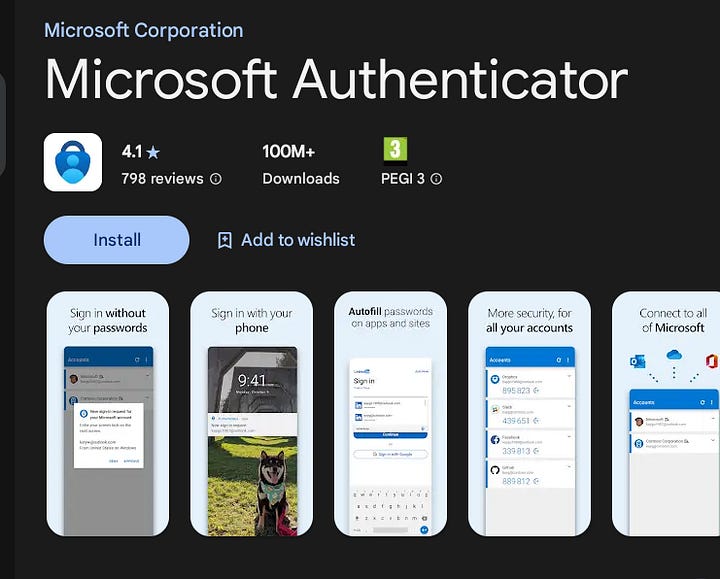
That doesn’t take away the worry if a phone number is compromised, but at least you have control of your digital logins via an authentication app, such as Google Authenticator or Microsoft Authenticator. They are free and I highly recommend you download and use them.
Are you at risk?
The risk of your SIM getting swapped depends on different things. Are you a public person? Do you have a lot of money, do you own Bitcoin and post about it on social media? Then you become a person of interest to hackers, and you may be at risk.
However, if you are a regular person, not mentioning anything about your financial situation on social media, and you are not a public figure, then the chances of your phone getting swapped decrease significantly.
I personally believe that using SMS for us “normies”, meaning regular people, with not thousands of followers or high-profile video game accounts (yes, that can be a thing too), is perfectly fine, and the risk of our SIM cards getting swapped lessens.
However, if you want to be on the safe side, then it will be wise to download an authenticator app and use that instead. In order for it to get hacked, it would mean that someone has gained physical access to your phone while being unlocked. The risk of that drops dramatically, but nothing is impossible.
Here are some good practices:
- Download an authentication app like Google Authenticator or Microsoft Authenticator from the App Store or Google Play Store.
- Replace the services that use 2FA SMS with 2FA via an app wherever possible.
- Avoid sharing sensitive personal information online.
- Pay attention to your phone signal and contact your provider instantly if you see a “no signal” on display. The sooner, the better, to prevent hackers from doing anything malicious.
As I was researching this article I found out that Gmail is going to drop its 2FA SMS and replace it with QR codes. If you use Passkeys, Google prompt, or an app, you’re fine.
Any 2FA is better than none. SMS works, but the consensus is clear: authenticator apps are the safer choice.
